Derived from the Italian 'scaglia' (chips of stone), scagliola is an increasingly rare 17th-century technique that transforms selenite plaster and raw pigment into complex, highly polished, stone-like surfaces. Rooted in the late Renaissance and Baroque periods, the craft demands extraordinary patience and physical labour.
While originally commissioned to decorate utility objects and architectural features, scagliola quickly transcended its practical origins to become a highly revered art form in its own right – one that liberated artisans from the rigid constraints of geology and allowed for boundless pictorial creativity. Today, Jilly Bernard is one of its few active practitioners.

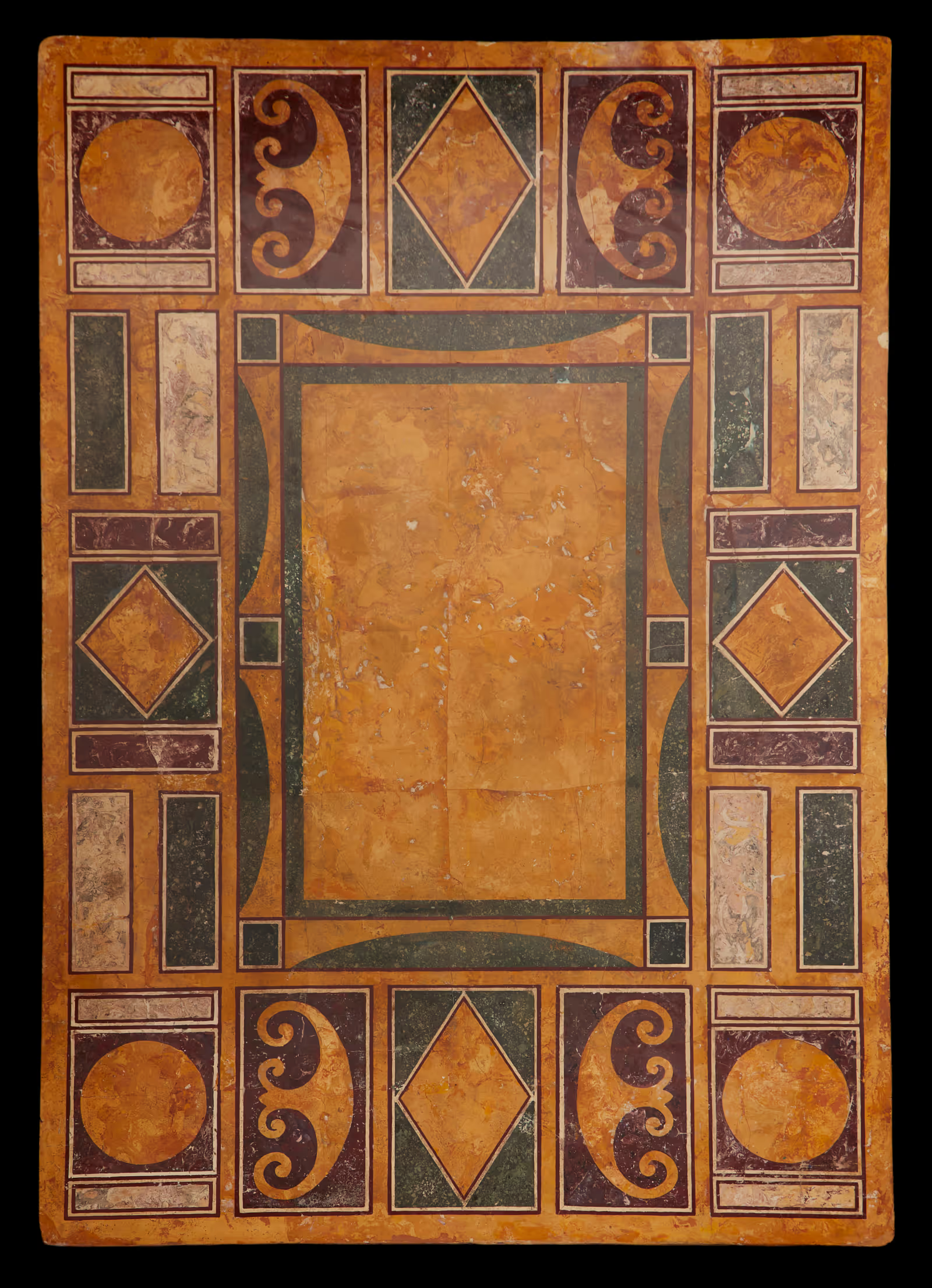
Scagliola is an art form preserved not in archives, but in the hands of its practitioners. It relies entirely on embodied, tacit knowledge – an intimate legacy passed directly from master to apprentice. The precise, intuitive ratio of selenite plaster to collagen hide glues, the timing of the exothermic set, and the physical sensory feedback of the polishing abrasives are imparted through years of shared observation and physical labour. This unbroken chain of knowledge is visually captured in these two tables. The first, a masterwork of 1st-century AD Roman geometric design, was created by the renowned Florentine artisan Cinzia Lunghetti and meticulously restored by her apprentice, Jilly Bernard. The second, featuring a complex pictorial parrot motif, is a table created entirely by Bernard. Together, they represent the vital survival of a 17th-century discipline.

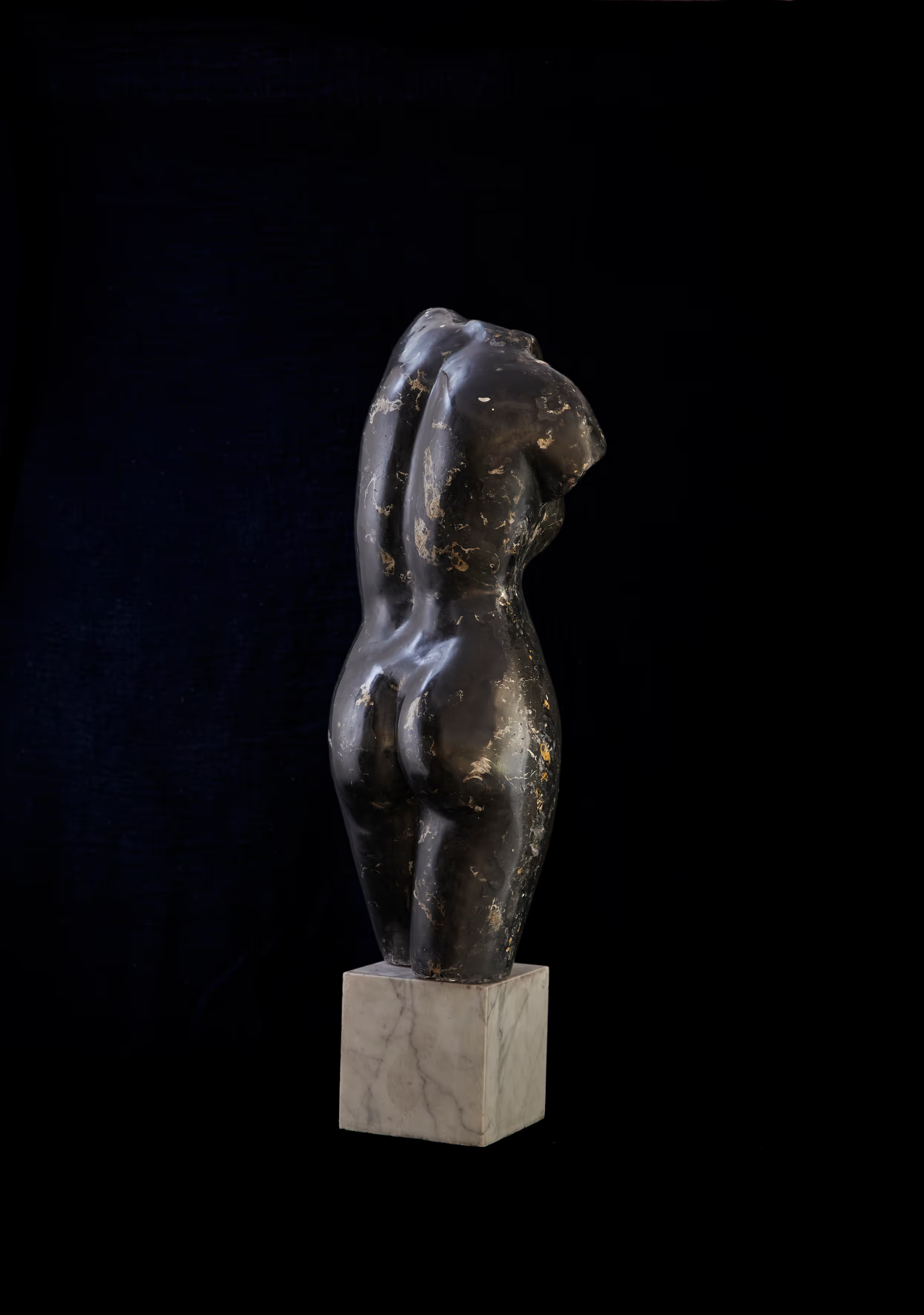
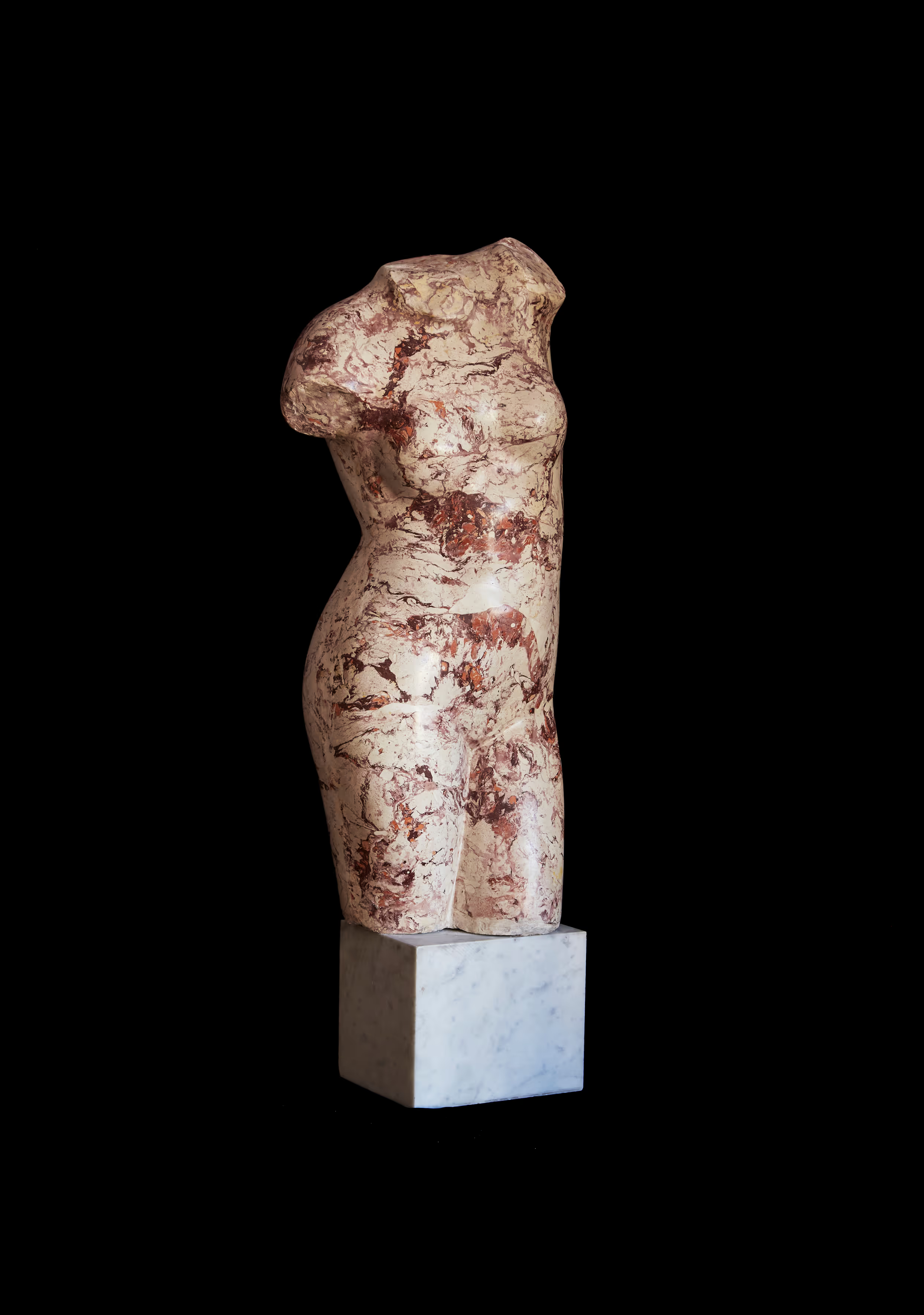
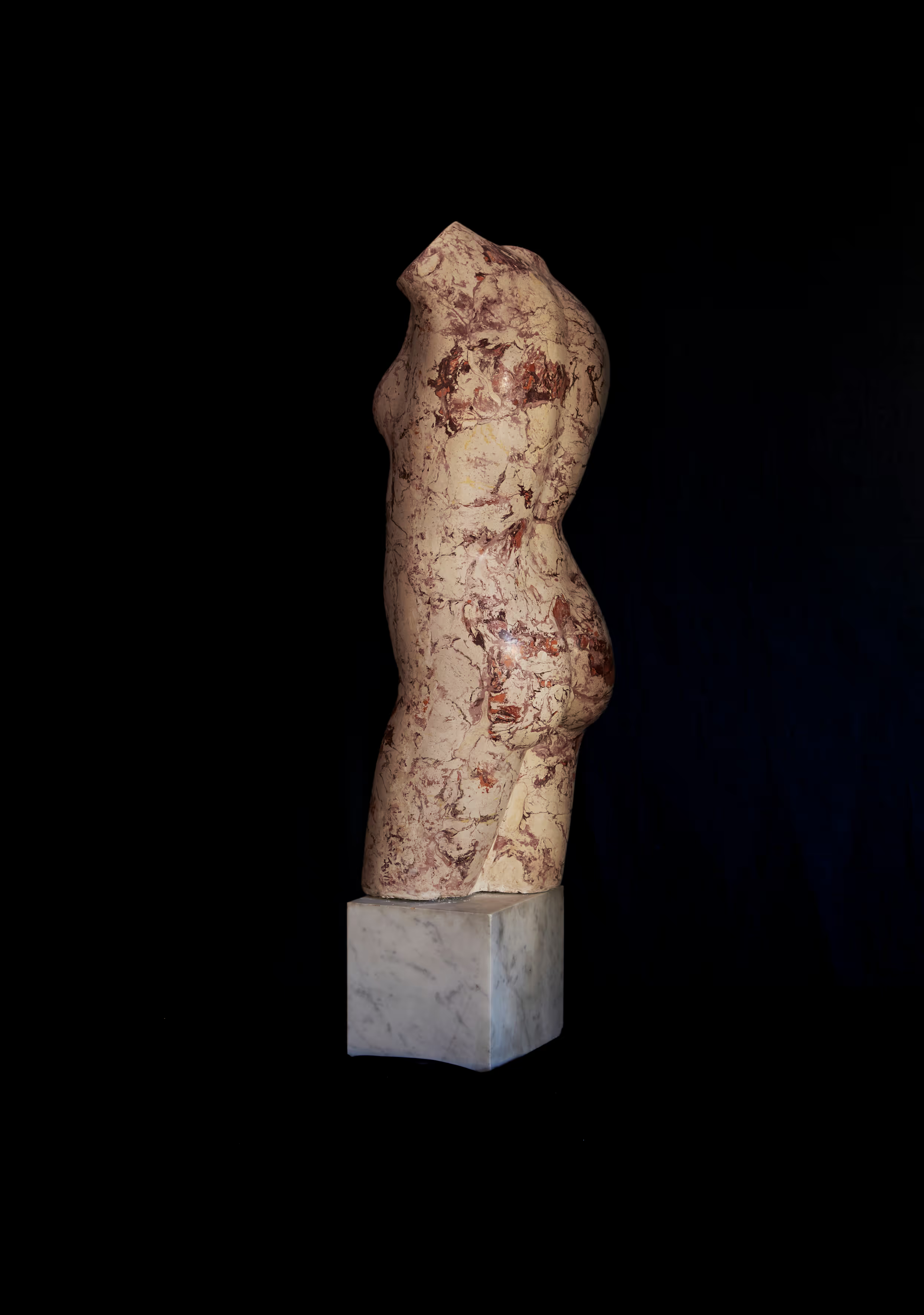
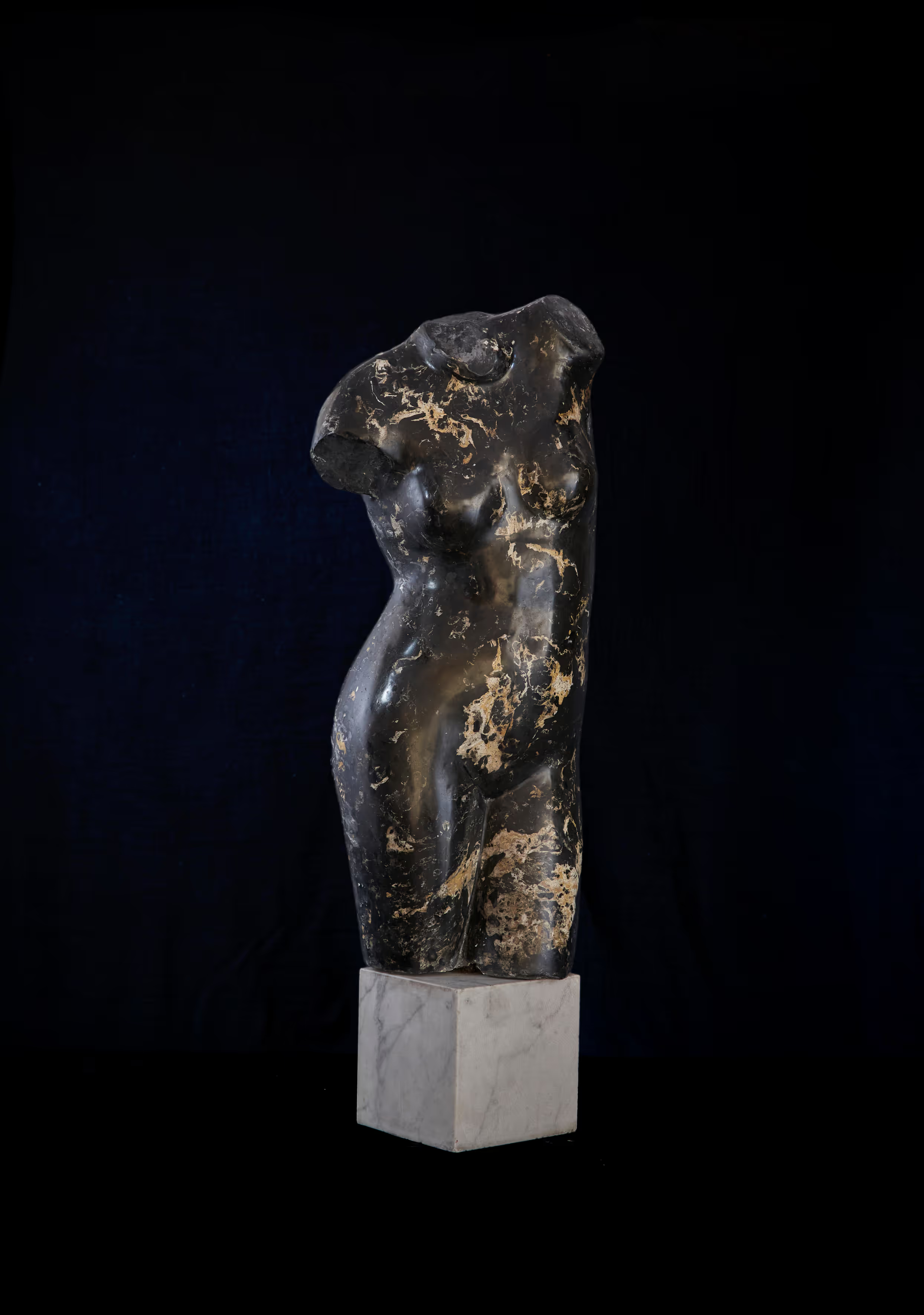
Historically, scagliola was engineered by artisans as a flat application for architectural pilasters or grand table tops. To pull the medium up into a complex, three-dimensional curve requires a monumental leap in technical mastery. The artist must manipulate the traditional method, layering, slicing, and kneading distinct batches of pigmented plaster to force the organic veins and striking lines of the marbled texture to flow naturally around the human body.
By deliberately titling this series The Eternal Feminine, Bernard elevates the medium from decorative craft to contemporary fine art. The title speaks to a profound duality: the woman as an ever-changing form – adapting to the shifting demands of society and physically transforming through the cycles of months and motherhood – yet remaining an unwavering anchor across both ancient and modern worlds. This paradox is literally cast into the scagliola.
The classical silhouette of the torso serves as the unchanging, eternal anchor, wihlst the material itself explodes into endless variance. The distinct colours, the organic blemishes, and the chaotic, natural veining of the faux marble reflect a state of constant adaptation and flux. The resulting sculptures are a triumph; an unwavering artistic commitment to exploring new territory with this lost art, creating dynamic, highly complex forms that are finally polished until they are completely smooth, resolute, and part of an enduring legacy.
The provenance of these magnificent figures is deeply intertwined with the Bernard family's own history. The original Impruneta terracotta lions were acquired by Catherine Courtauld circa 1910. For over a century, these heirlooms travelled with the family from residence to residence across England and France, before finally finding a permanent anchor at the Bernards' home near Florence. To honour this intimate legacy – Courtauld was the grandmother of Bernard’s husband – the artist commissioned a highly precise mould of the original terracotta figures.
For Bernard, these lions represent the concept of a family finally coming home to a new place. By translating these travelling guardians into scagliola, she uses a historic Italian art form to tell a deeply personal story anew. It stands as a testament to an enduring family legacy and a profound love for their home in Tuscany, forming the emotional core of her Second Series of work.
To cast and finish scagliola on this monumental, highly intricate scale is an exercise in immense endurance. Taking several months of time to complete a single pair, these lions represent quite possibly the most complex sculptural forms ever attempted in the medium. The resulting works stand as true contemporary treasures – commanding the gallery with the absolute weight of natural stone, while immortalising a profound family journey.
.jpg)

