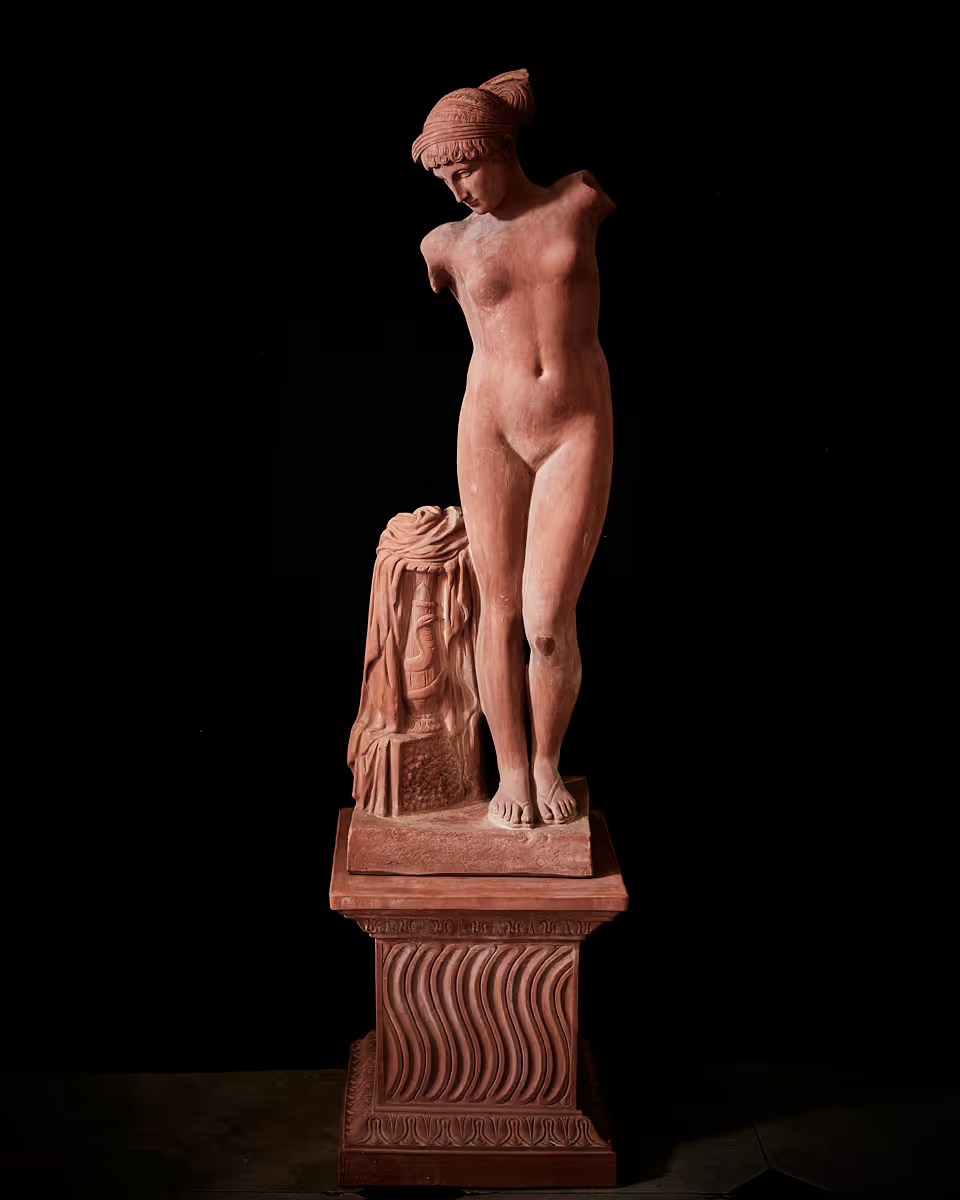
The Venere Esquilina is a commanding testament to the highest echelons of terracotta artistry. This monumental, freestanding figure captures a serene, introspective elegance, anchored by a classic contrapposto stance. The form relies entirely on the precise execution of human proportion and the subtle, organic drape of the fabric resting upon the supportive plinth. It is designed to act as an unyielding focal point, bringing a profound sense of classical authority to any interior space or formal garden.
This specific form carries a deeply significant historical lineage. The original marble was unearthed in Rome in 1874 during the excavation of the Esquiline Hill, specifically within the ancient Lamian Gardens. Widely considered to be a 1st-century AD Roman copy of a Hellenistic Greek original from the 3rd or 4th century BC , the figure is celebrated as a syncretism of Venus-Isis. This interlinking of deities makes it a profound symbol of female divine power across ancient cultures , with some historians even speculating it may depict Cleopatra VII as Venus. Beyond its ancient origins, the piece holds a vital place in the history of Florentine craftsmanship. The mould used to create this figure originates directly from the Manifattura di Signa, a prestigious workshop founded in 1895 by the Bondi brothers to preserve the pinnacle of ancient art. Featured prominently in their 1910 catalogue under the name Venere Lamia , this piece represents a direct continuation of that rigorous pursuit of excellence.
From a critical perspective, executing a figure of this scale in terracotta is an extraordinary technical achievement. A freestanding human form lacks the inherent, balanced stability of a traditional pot. The entire weight of the torso and upper body presses downward onto the slender, highly vulnerable ankles while the clay is wet. Furthermore, as the piece shrinks by 7% during the drying phase , the complex facial features must be carefully monitored and manually adjusted daily to prevent the expression from warping or being irrevocably ruined. Relying on a painstaking combination of historical plaster moulding and the slow, unsupported hand-building of the colombino technique, the Venere Esquilina seamlessly translates the delicate nuance of the ancient world into the enduring strength of pure Impruneta clay.

