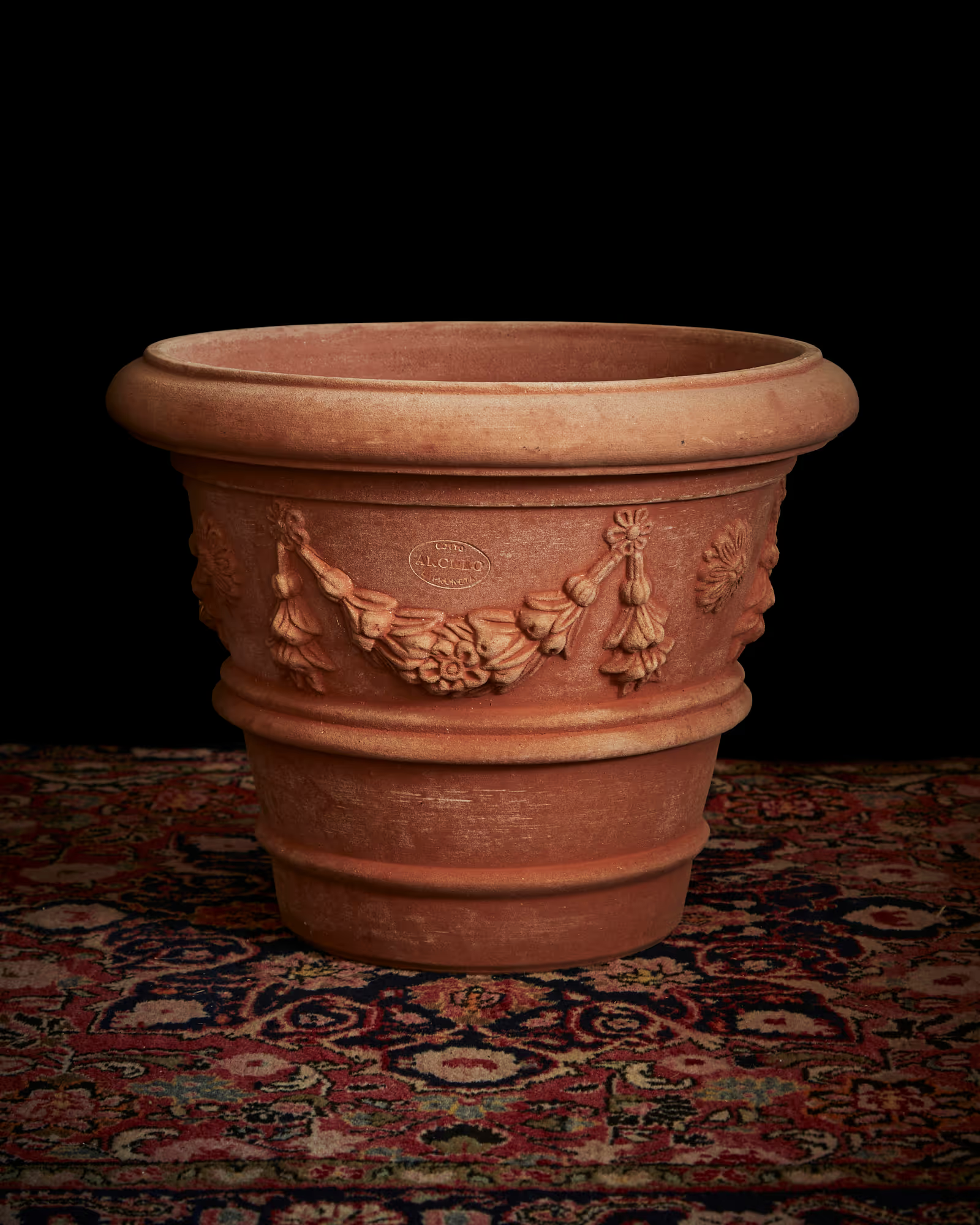
The Vaso Festonato represents a profound connection to the ancient world, capturing a pivotal shift in classical mythology. The heavy floral swags draped across its surface are far more than mere ornamentation; they are a lingering homage to a deeply naturalistic society. We trace this motif back to the original trio of the Horae – Auxo, Carpo, and Thallo – the ancient goddesses of the seasons and natural order, before their roles were later rewritten by classical civilisations to represent human justice and civic law. These garlands serve as a beautiful, earthy remnant of a time when humanity's focus was entirely bound to the rhythms of flora and fauna.
Suspended above these sweeping botanical forms is the rosette, a symbol carrying immense cosmological weight. Passed down through Greek and Roman hands, we believe this motif finds its true origin in the ancient star of the Sumerian goddess Inanna. Over centuries, this celestial emblem evolved – first softening into the sacred lotus, and eventually blooming into the varied floral rosettes seen across classical antiquity. It remains an enduring emblem of the new light piercing the world – symbolising the first light of the planet Venus, or the triumphant return of spring after the long dark of winter.
Forged from the stony, iron-rich Impruneta clay, these raised reliefs cast deep, dramatic shadows that contrast beautifully with the chalky, salted patina of the surface. Between prominent structural bands, the Vaso Festonato seamlessly marries the elemental rawness of the Tuscan earth with the profound, celestial symbolism of antiquity.

