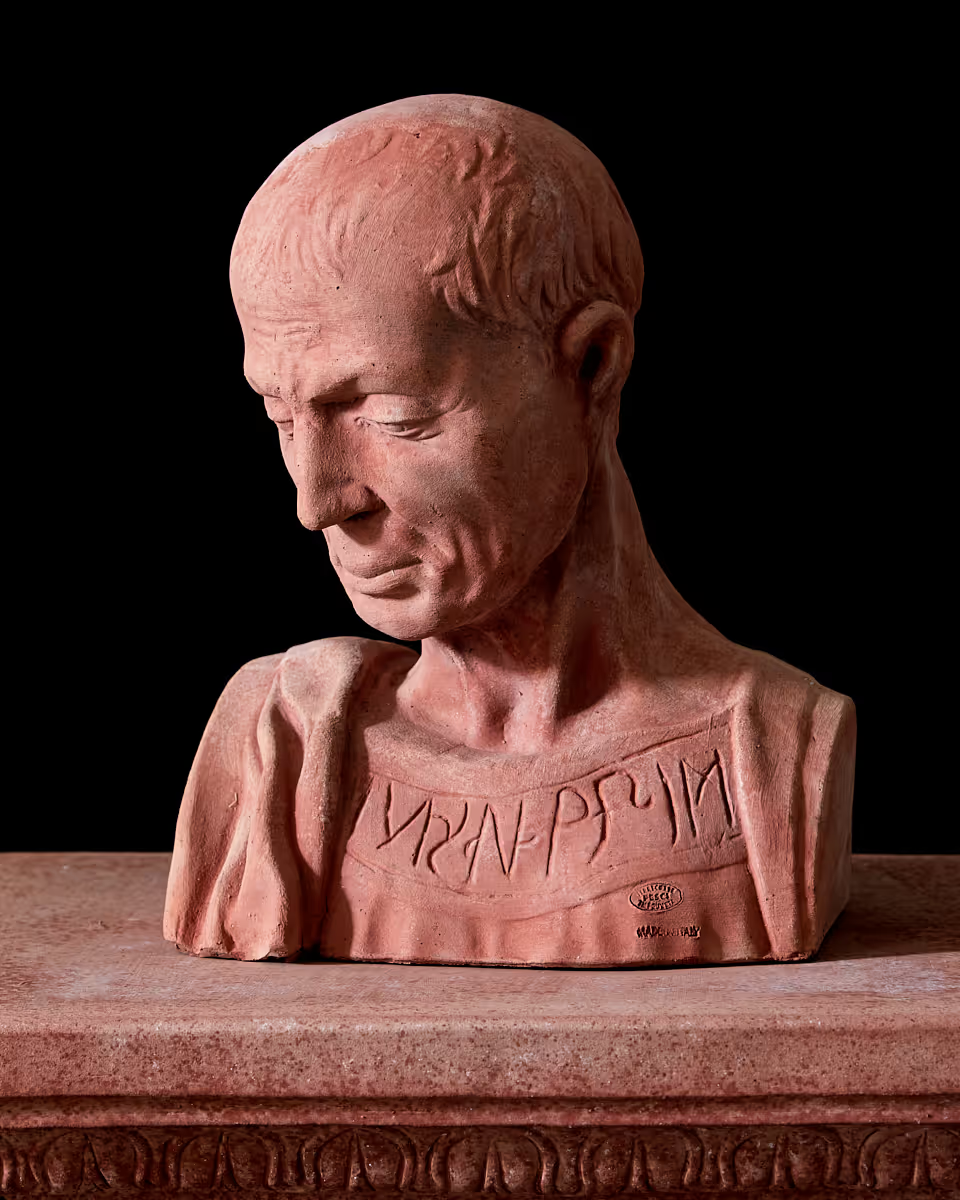
The Poggio Bracciolini captures the quiet, contemplative focus of the early Renaissance. Presented as a classical portrait bust, the figure features a delicately draped tunic adorned with intricate pseudo-Kufic script, anchoring a deeply thoughtful, lined visage. The piece relies entirely on the striking realism of its subject, presenting a downward gaze that invites reflection rather than imposing authority. It acts as a profound symbol of scholarly pursuit, making it a definitive addition to a private study, library, or reading room.
Historically, Poggio Bracciolini was one of the most celebrated scholars and humanists of the Italian Renaissance, renowned for recovering lost classical manuscripts from forgotten archives across Europe. His work was heavily favoured and supported by the Medici family, whose zeal in unearthing and making accessible the texts and philosophies of antiquity acted as the foundation stone for thinkers to re-evaluate humanity’s position in the world. The inclusion of hand-tooled pseudo-Kufic script on his tunic – a decorative motif imitating Arabic text – highlights the era's deep reverence for ancient wisdom and the translation of classical knowledge.
From a critical standpoint, successfully producing a bust of this delicate complexity in terracotta requires absolute mastery over the clay's drying process. The piece features a distinct structural vulnerability: the weight of the slightly bowed head resting upon the slender column of the neck. As the object dries and undergoes its natural 7% shrinkage, the internal tension shifts significantly. For a portrait defined by such a subtle, introspective expression, this phase is exceptionally risky; the nuanced features can be irrevocably ruined by the moving material. The artisan must carefully monitor and manually adjust the clay daily to ensure the scholar's quiet focus and the precise geometry of the script remain perfectly true before reaching the intense heat of the kiln.

