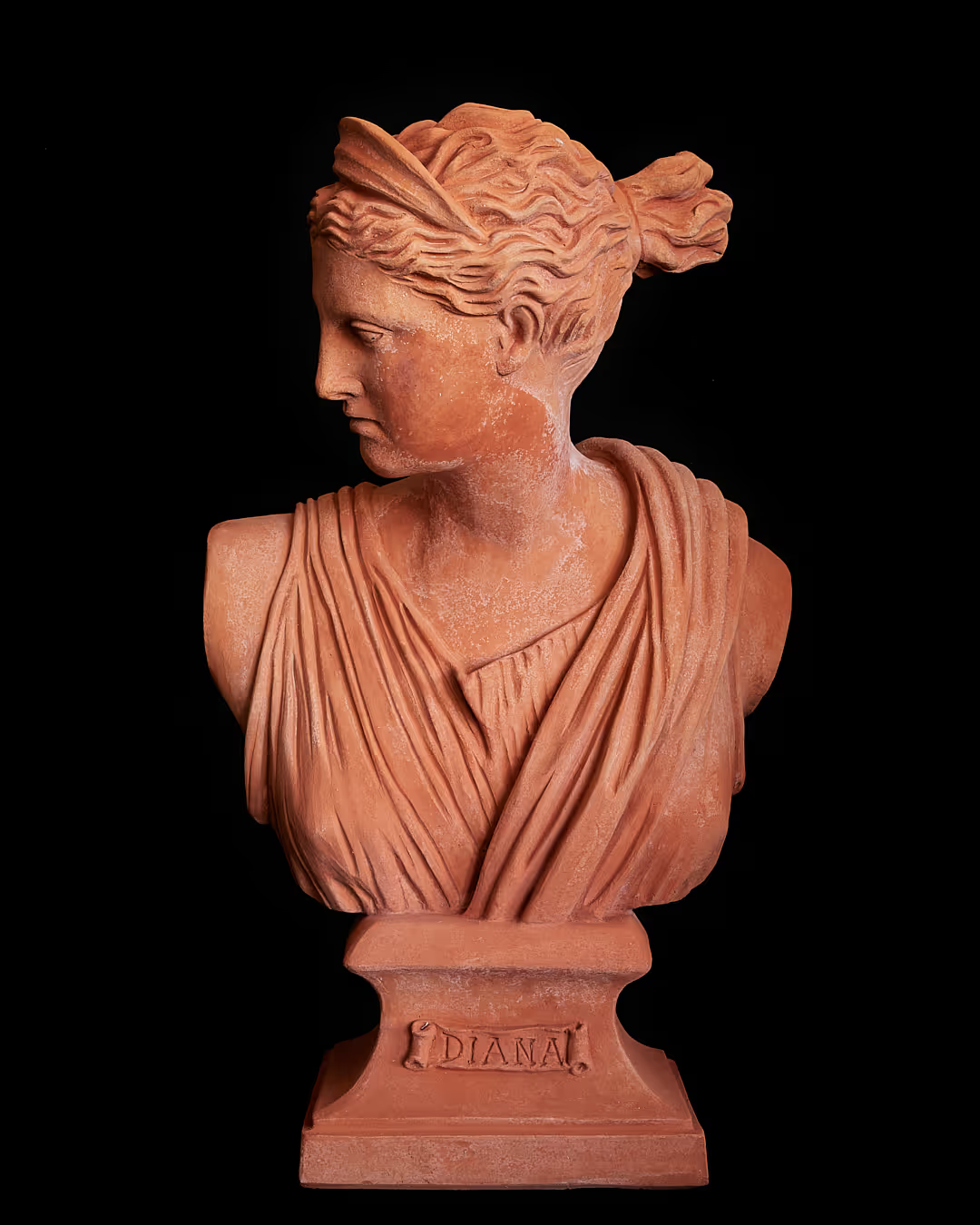
The Diana Cacciatrice brings a profound sense of dynamic elegance to the Masterworks collection. Modelled exclusively as a classical portrait bust rather than a full-figure statue, the piece isolates the sharp, watchful turn of the goddess's head and the intricate, deeply channelled folds of her draped tunic. It relies on a graceful asymmetry, capturing a single, concentrated moment of sudden awareness. It is designed to act as a sophisticated, historical focal point for a formal gallery, a classic architectural niche, or an elegant library.
Historically, this specific portrait isolates the head and shoulders from the monumental antiquity known academically as Artemide con la cerva (Artemis with the hind) – a Roman marble copy of a lost ancient Greek bronze. While the complete statue is often celebrated as the "Diana of Versailles" due to its centuries spent as a defining centrepiece of the French royal courts, its true origins lie in strict classical antiquity. This highly refined terracotta bust proudly reclaims that ancient Greco-Roman heritage. Featured prominently in the historic 1910 catalogue of the Manifattura di Signa, it represents the Bondi brothers' dedication to translating the cold grandeur of classical marble into the unmatched warmth and precision of Florentine craftsmanship.
From a critical standpoint, successfully producing a bust with such a sharp lateral gaze presents a unique structural vulnerability. Unlike a forward-facing portrait, the heavy mass of Diana's head is not resting evenly over the central column of the neck; instead, the dynamic twist shifts the centre of gravity off-axis. As the object undergoes its natural 7% shrinkage, this uneven weight distribution places immense twisting tension on the wet clay of the neck. Furthermore, the thick, dense clay of the intricately gathered hair knot at the back loses moisture at a completely different rate to the thin ridges of the drapery below. The artisan must meticulously manage this asymmetrical tension, ensuring the graceful, turned posture remains flawlessly aligned before it ever reaches the intense heat of the kiln.

