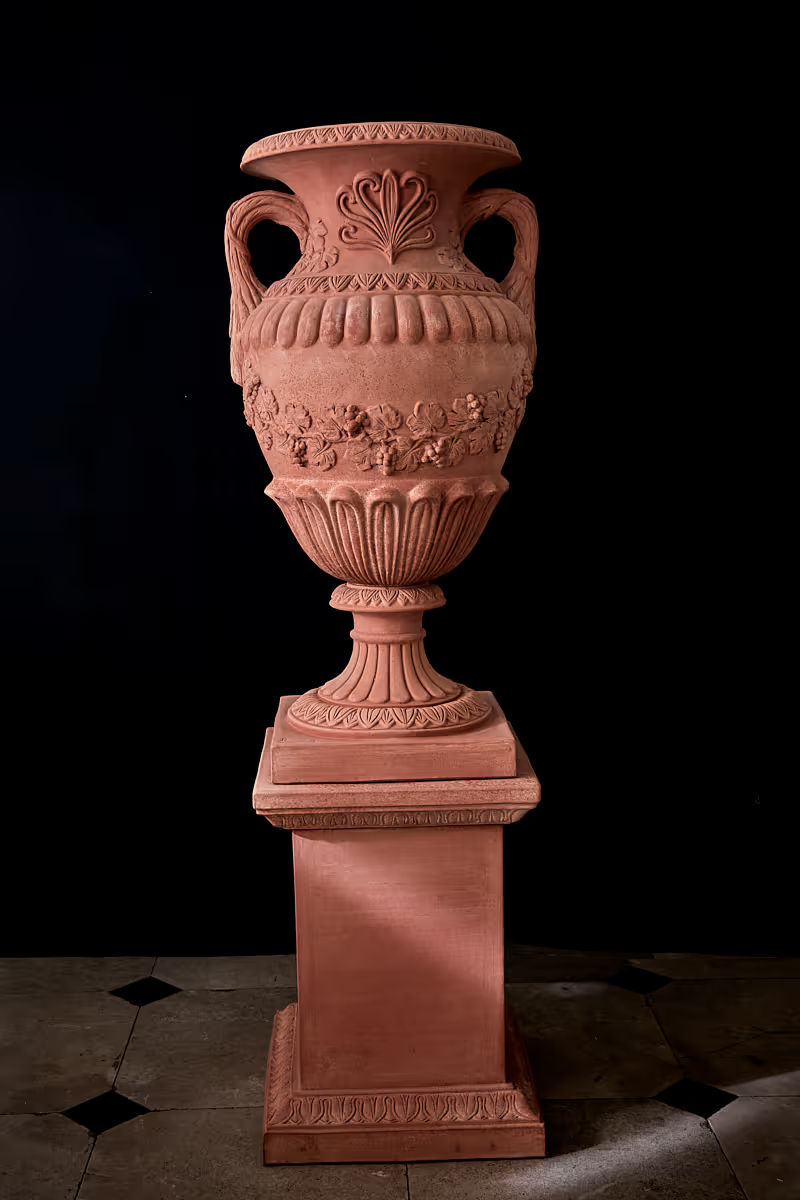
The Coppa di Medicea represents the absolute pinnacle of ornamental terracotta. Modelled as a monumental coppa – or classical chalice – this vessel features an extraordinary array of high-relief detailing – from the intricate grapevines and acanthus leaves encircling its body to the precisely fluted pedestal and elaborate handles. It relies on flawless classical proportion, designed to act as a definitive, aristocratic focal point within a formal garden, a grand courtyard, or an architectural entrance.
This specific design captures the opulent aesthetic championed by the Medici family during the Florentine Renaissance. As a true coppa, its elegant, elevated form acts as an homage to the era's dedication to transforming the noble estate into a theatre of classical abundance. Replicating these monumental, highly ornamented chalices in pure terracotta became the ultimate symbol of cultured wealth, serving as enduring emblems of hospitality and agricultural bounty.
From a critical standpoint, successfully producing a coppa of this monumental scale and complex ornamentation requires an ingenious approach to the clay's physical limits. The vessel is intensely top-heavy, with an expansive rim and heavy decorative elements resting upon a relatively narrow foot. As the object dries and undergoes its natural shrinkage, the immense downward pressure would ordinarily cause the wet clay of the pedestal to buckle or warp. To counteract this inherent structural flaw, the artisan employs a remarkable technique: the entire wet form is suspended in mid-air using ropes locked firmly onto the interior walls. This removes the gravitational burden from the base entirely, allowing the intricately varying thicknesses of the body to dry evenly and safely before ever facing the extreme heat of the kiln.

