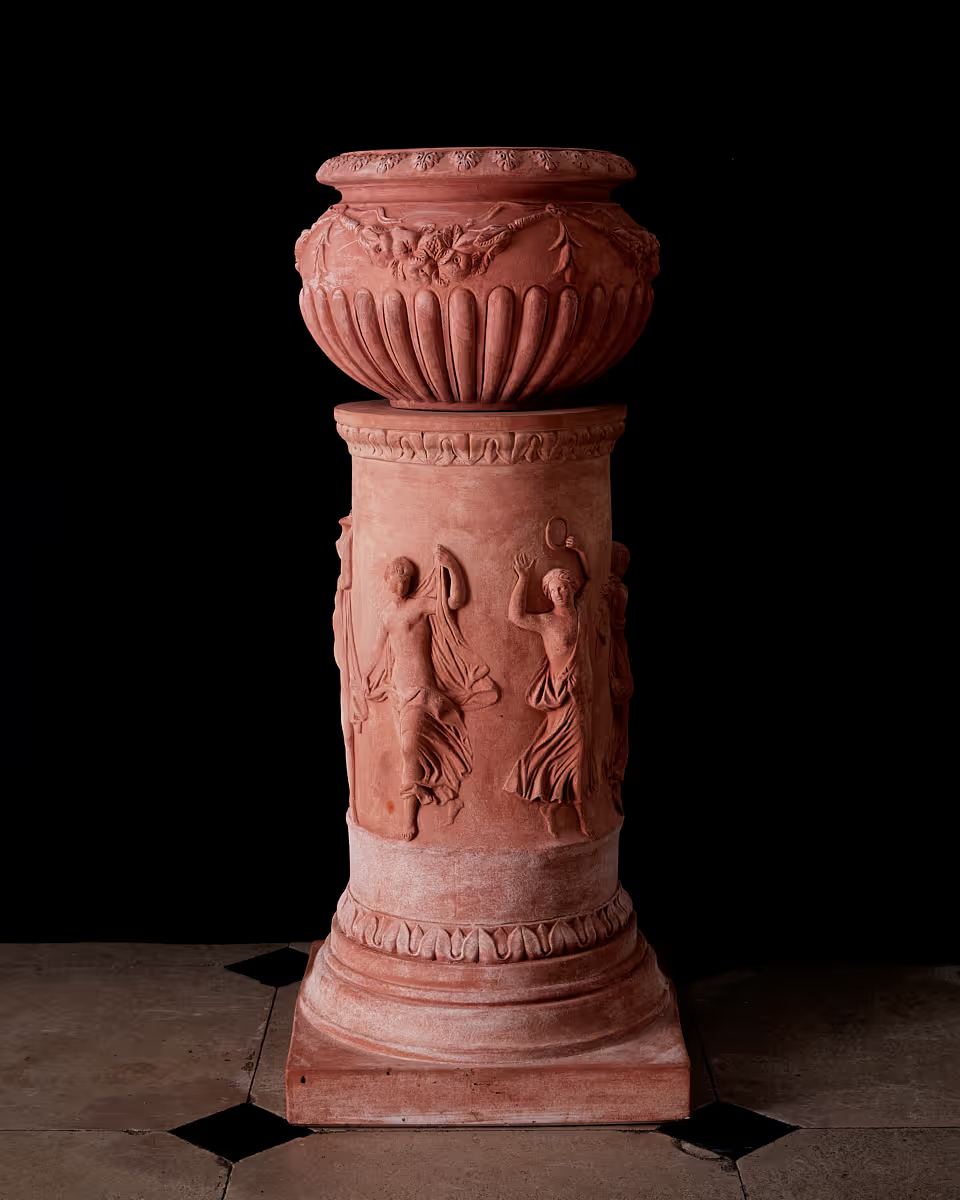
The Cachepot Decorativi brings a highly concentrated, ornamented presence to the Masterworks collection. Its profile is defined by a deeply fluted, or gadrooned, lower bowl that rises to meet a heavy upper register adorned with intricate, high-relief botanical festoons. It relies on a beautifully balanced geometry, designed to act as an opulent, standalone botanical anchor on a terrace wall or atop a formal pedestal.
Historically, the cachepot served as an essential element of the aristocratic estate, allowing for rotating, seasonal botanical displays without the need to directly pack the decorative vessel with heavy soil. The specific, intricate detailing of this piece is a direct continuation of the Florentine Renaissance aesthetic. It was championed by the Manifattura di Signa, a prestigious workshop opened in 1895 by the brothers Camillo and Andrea Bondi. They established their foundry specifically to combat the proliferation of low-quality pottery, focusing entirely on producing the most beautiful, high-quality terracotta pieces of their time. Featured directly in their original 1910 catalogue, this vessel is a surviving testament to that uncompromising pursuit of classical excellence.
From a critical standpoint, the architecture of this piece relies on a demanding physical contrast: the heavy, thick clay of the high-relief floral garlands sits directly above the thin, deeply recessed channels of the fluted base. As the object undergoes its natural 7% shrinkage during the drying phase, these drastically different thicknesses lose moisture at highly irregular rates. The artisan must carefully manage this tension, ensuring the immense weight of the wet upper register does not compress or collapse the vulnerable fluting beneath it before the piece is finally fired.

